











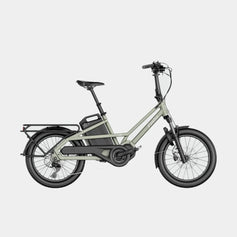


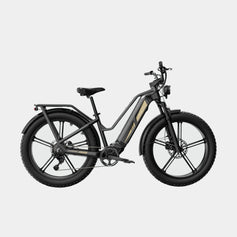

The clocks go back an hour at 2am on Sunday 25 October. You get the lie-in, and in return it's dark by half five for the rest of the year. For a lot of our customers that's the week the bike stops living in the shed or on the balcony and moves into the hall, and the charger moves in with it.
We use the clock change as our reminder to press the test button on the smoke alarm, although the fire service advice is to test it every week, which is better again. This year we'd add one more small job to the list: have a proper look at where, and how, you charge your e-bike or e-scooter.
None of this is meant to put the frighteners on you. Lithium-ion batteries power everything from your phone to your laptop, and an e-bike battery that's looked after and charged properly will give you years of no-bother riding. The problems nearly always start the same few ways, and every one of them is easy to avoid. Here's what we tell people at the counter in Ballymount, written up for the darker months.
Why this matters this winter
Over the past twelve months we've sold more than 2,000 e-bikes and e-scooters, and 561 e-bikes went out the door in the last 60 days alone. That's a lot of people facing their first Irish winter with a lithium battery in the house, plus a fair few Revvis about to land under Christmas trees.
The National Directorate for Fire and Emergency Management doesn't mince its words: "charging is the highest risk activity for e-scooters and e-bikes". Its latest figures, published in August, show fire brigades attended 21,794 fires in 2025, 4,131 of them in people's homes, and fire deaths rose to 34, up from 25 the year before. Fire Safety Week ran from 12 to 18 October, and one of the risks it singled out was charging electrical items in the bedroom.

The five-minute clock-change check
While you're up on a chair pressing the smoke alarm button, give your bike or scooter the same five minutes:
- Test the smoke alarm, and make sure there's one on the same floor as the spot where you charge.
- Look at the charger. It should be the one that came with the bike, or a genuine replacement for that exact model. A frayed or kinked cable, a cracked casing or a scorched plug means it's time for a new one.
- Look at the battery. Dents, cracks, swelling, a leak, a funny smell, or a battery that gets properly hot on charge are all reasons to stop using it and give us a call.
- Look at the spot. Not in the hall, not at the bottom of the stairs and not beside the front door. More on that below.
- Set the habit. Charge while you're at home and awake, and unplug when it's full.

Where to charge, and where not to
The advice from the National Directorate for Fire and Emergency Management and Dublin Fire Brigade is clear, and it's worth following to the letter:
- Use the charger that came with it, or an approved replacement for that model.
- Charge outside the living space where you can. A dry shed or garage with a proper socket is ideal, as long as it isn't too cold (more on that below).
- Never in the hall or near an exit, and never in the shared corridors or stairwells of an apartment block. Those are your escape routes.
- If it has to be indoors, pick a spot that won't cut you off from the other rooms, and keep it out of the bedrooms.
- Not overnight, and not while you're out. Dublin Fire Brigade says to unplug even if you're only popping out for a few minutes.
- Unplug once it's full. Charge for as long as it takes to fill the battery, then take it off.
- Don't cover it. No coats or jumpers thrown over the bike, scooter or battery while it charges; that traps the heat.
- Smoke alarms on every level, tested weekly, and check the expiry dates while you're at it.

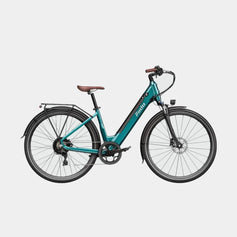
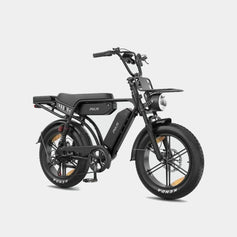
Most of the e-bikes we sell have a removable battery, which makes this easy. On the Fiido C11 Pro, the Engwe EP-2 3.0 Boost or the Engwe Engine Pro 3.0 Boost, the battery comes out of the frame in seconds. Leave the bike locked up and bring the battery in on its own. Most of our e-bikes take somewhere between three and a half hours (the Engwe EP-2 3.0 Boost) and seven hours (the Fiido C11 Pro) to charge from flat, so an evening charge while you're at home is plenty.
E-scooters are different. On most of them, including the KuKirin G2 Max and the KuKirin G2 Master, the battery is built into the deck, so the whole scooter comes in to charge. Fold it and park it where it isn't blocking your way out, and keep it off the stairs.
Cold weather and your battery
Cold weather takes the edge off any lithium battery. Fiido reckons on about 30% less range once the temperature drops below 5°C, and Engwe puts the winter drop at 20 to 30%. That range isn't gone for good: the battery chemistry simply works more slowly in the cold, and it comes back as the weather warms up.
Where the cold really matters is charging. Engwe's manuals say not to charge below 5°C or above 30°C, and Fiido recommends charging indoors at room temperature, ideally 15 to 25°C. So if the battery comes in from a frosty ride, let it sit and warm up before you plug it in. Engwe suggests at least an hour; Revvi says at least 30 minutes for its kids' batteries. It also means the fire service's "charge outside where possible" needs a bit of common sense in January. A garage that's close to freezing is too cold to charge in, so on those nights charge indoors and follow the rules above.
A couple of habits help a lot. Keep the battery somewhere dry and well above freezing between rides, rather than in a car boot or a cold shed. On frosty mornings, Fiido's advice is to ride in a low or medium assist level, which stretches what range you have. And if the bike has a dual battery, like the Engwe M20 26Ah, the same rules apply to both packs.


Wet days: dry first, charge second
Our bikes and scooters are built to cope with Irish rain, but they're not waterproof, and Pixar's manual says as much. After a wet spin, wipe the bike down, paying special attention to the charging port (that's Revvi's advice for its kids' bikes, and it's good advice for everyone), and let it dry at room temperature. Never charge while the charger or the power supply is wet; Fiido's and Engwe's manuals are both clear on that.

Not riding until spring? Store it properly
If the bike is going into hibernation until spring, the battery needs a bit of minding. Don't store it full, and never store it flat. Fiido and Pixar both recommend storing it at around 40 to 60%, somewhere cool and dry indoors (Pixar says 10 to 25°C), and topping it up regularly. Fiido's and Engwe's manuals say to give it a charge of two hours or more every month; Pixar says every two months. The figures vary a little by brand, so check your own manual, and don't leave the battery sitting on the charger for weeks either.
Letting a battery run completely flat and sit that way is the one thing to avoid. It can kill the cells, and warranties generally won't cover it: Fiido's, for example, excludes a battery that failed after being left uncharged for over a month.
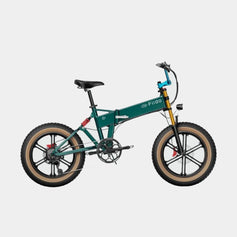
Folding bikes make winter storage easier. The Engwe ZIP folds down to about the size of a suitcase and tucks in beside the sofa, with the battery stored somewhere cool and dry, off the charger.

Genuine chargers and spare batteries
A charger is not just a plug. It's matched to your battery's voltage, its connector and its cut-off when the battery is full. A charger from a different bike, or a cheap "universal" one from online, can fit the socket and still be wrong. We sold 387 chargers in the past year. If you want a second one for the office, that's grand, as long as it's the genuine one for your model.
We keep the original chargers for the bikes and scooters we sell, plus spare batteries for the most popular models. Here's a selection; the full range is in our chargers and batteries collections.
 Fiido D3 Pro Charger 42VOriginal 42V charger for the Fiido D3 Pro.€50
 Fiido M1 Pro / G-Booster Charger 54.6VGenuine 54.6V charger for the M1 Pro.€59.99
 Fiido D11 / D21 Charger 42VA spare for the office, if you ride a D11.€39.99
 Engwe EP-2 Pro ChargerOriginal replacement for the EP-2 Pro.€60
 Revvi 20″ Plus & 24″ Charger 48VFor the Revvi 20″ Plus and 24″.€85
 Revvi 16″ & 16″ Plus ChargerFor the Revvi 16″ and 16″ Plus.€40
 KuKirin G2 Pro 2025 Charger 54.6VFor the 2025 G2 Pro scooter.€60
 KuKirin G4 Charger 67.2VOriginal 67.2V charger for the G4.€60
 Fiido C11 & C11 Pro Battery 499.2WhA spare or replacement 499.2Wh pack.€349
 Service & Repairs BookingBattery and charger checks in our workshop.from €30
When you're buying, the fire service advice is to stick to a reputable retailer and check for a genuine CE mark and the manufacturer's details on the packaging. Not sure which charger is yours? The voltage is printed on the label of the one you have, and on the battery itself. Send us a photo or bring it in and we'll match it.

If a battery is damaged, swelling or smoking
The fire service lists the warning signs: a burning smell, hissing or popping, smoke or gas, a battery that gets excessively hot, or a bike or scooter that starts behaving oddly or charging strangely. If you notice any of them, stop using it straight away and get in touch with us. A battery that's been dropped, crashed or left sitting in water should be checked before it goes back on charge, too.
If a battery ever does catch fire, don't try to tackle it. Dublin Fire Brigade warns that household fire extinguishers won't be effective on a lithium battery fire and that the fumes are extremely toxic. Unplug it only if that's safe, close the door on the room, get everyone out, and call 112 or 999 once you're out, telling the call-taker that an e-bike or e-scooter is involved. Don't go back in for anything.
When a battery reaches the end of its life, don't put it in the household bin. Since August 2025, shops that sell e-bike and e-scooter batteries have to take old ones back for recycling, free of charge, so bring it back to us or to wherever you bought the bike.
A new bike under the tree?
If there's a kids' e-bike going under the tree this year, the charger is the adults' job. Revvi's own advice is to charge the battery after every ride. A flat Revvi 16 takes about five and a half to six hours to fill (the Revvi 12 about two and a half to three), so it's an afternoon or evening job, not an overnight one.
Give it its first full charge on Christmas Eve, starting in the afternoon so it's finished well before bed, in a room with a smoke alarm, and unplug it when it's done. That way it's ready to go on the morning and nobody has charged it overnight. Keep the charger out of the child's bedroom, and show them how to check the battery level rather than how to plug it in. If it's then parked for a few weeks over the winter, Revvi suggests storing the battery indoors at around 50 to 60% and topping it up every three to four weeks. If you've a Christmas Club deposit down with us, ask about all this when you collect and we'll talk you through it.


For where they can ride it once it's charged, our parents' guide to where kids can ride an e-bike in Ireland covers the rules.
The honest bits
- Batteries wear. Every lithium battery slowly loses capacity over the years. Good charging habits slow that down; nothing stops it.
- Winter range is shorter. If your bike did 80 km in August, don't expect the same in January. Plan the commute with some slack.
- We can't diagnose a battery over the phone. If it's acting oddly, bring it in or book a check and we'll test it properly.
- Cheap chargers aren't a bargain. If a charger online is half the price of the genuine one, there's usually a reason.
Call in to us
We're at Unit 19B, Fashion City, Ballymount, Dublin 24. If you'd like a battery or charger looked at, book a service and repair slot and our workshop team will check it over. The fire service also recommends having any second-hand bike or scooter inspected by a competent technician, so if you've bought one privately, that's a job for us too. Chargers and parts can also be ordered online, with delivery across Ireland. Every bike and scooter we sell comes with a 1-year warranty, and for bigger purchases you can spread the cost with Humm or Klarna.


For the rest of the winter kit, our Dark Evenings Kit covers lights, locks and hi-vis, and our care guide covers tyres, brakes and the chain.
So: test the alarm, move the charger out of the hall, and enjoy the extra hour in bed. Mind yourselves out there.
This is general safety guidance written on 23 October 2026, not a substitute for your bike's own manual or for advice from your local fire service.
Sources: NDFEM: fire deaths and charging safety (Aug 2026) · Fire Ireland: e-scooter and e-bike fire safety · Dublin Fire Brigade: e-scooters and e-bikes · WEEE Ireland: e-bike battery take-back